
Inosculation
An inward kiss.

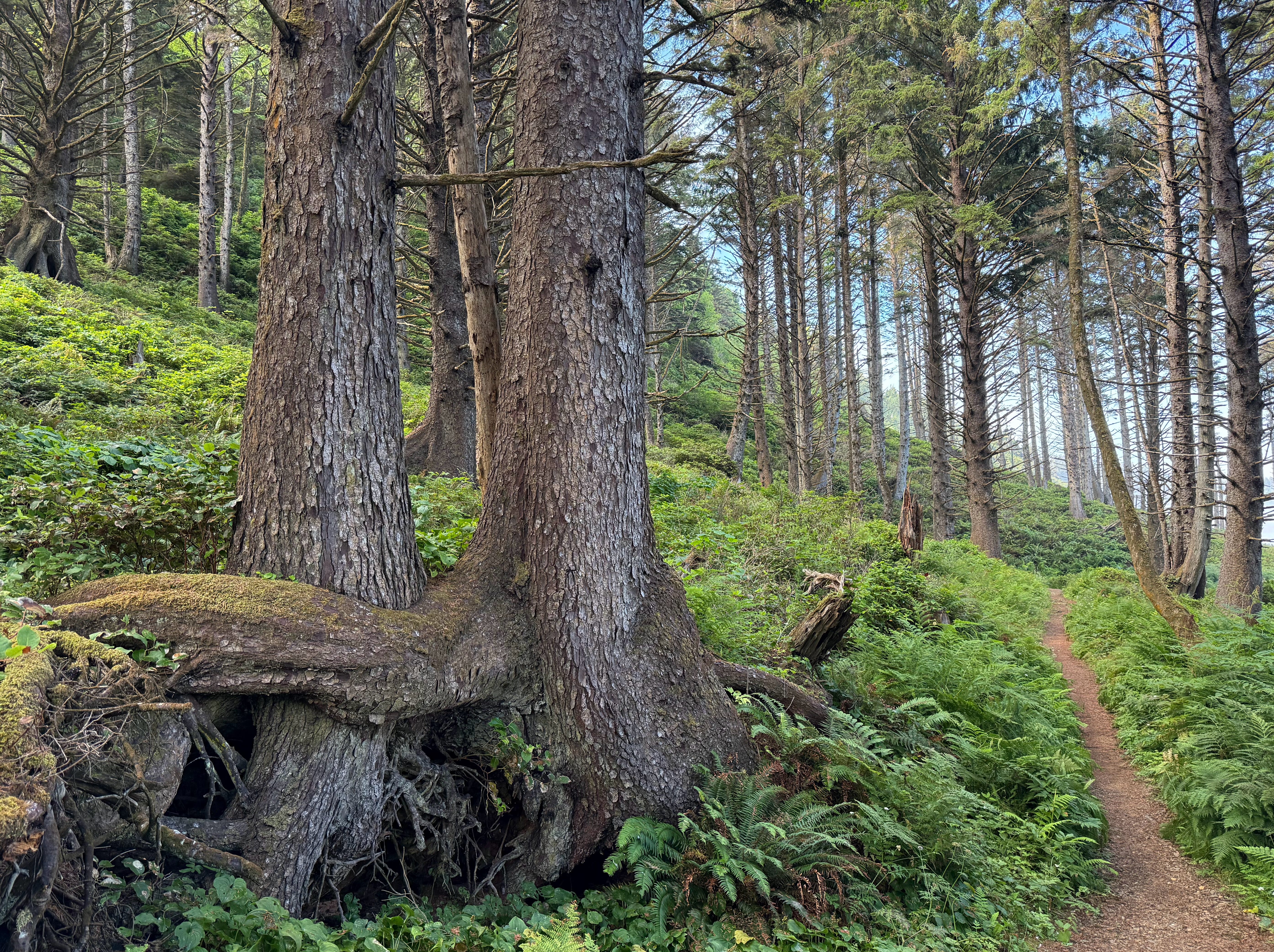
Because it’s so emblematic of an Oregon coastal forest, I’ve become increasingly more fascinated by and familiar with the Sitka spruce. And thanks to casual but extensive reading and observation, I have discovered a number of interesting things about the coniferous evergreen. I suppose the leading bullet point is just how big they are. The Sitka is by far the largest spruce species on earth and the fifth largest conifer in the world.
But there is something that this and some other tree species do that is far more fascinating to me than physical enormity. Due to the fact that it tends to grow in wet and poorly-drained soil, the Sitka spruce has a shallow root system with long lateral roots and few branchings. So these trees rely heavily on each other through a process called inosculation.
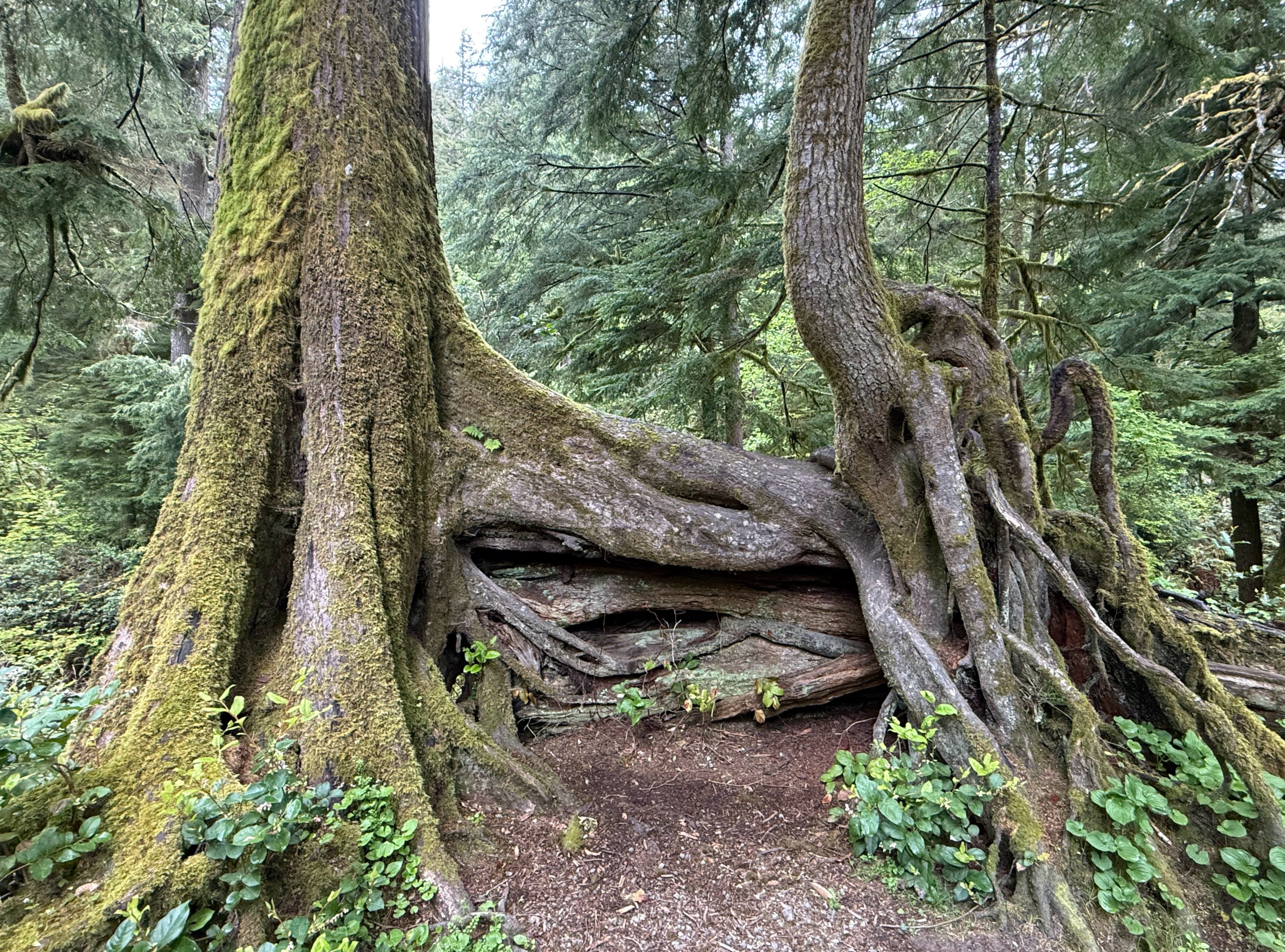
Inosculation is a natural phenomenon in which trunks, branches, or roots of trees intertwine, grow together, and form a fused, permanent bond. Inosculated roots share nutrients, making all the trees involved more vigorous, and occasionally, provide life support for weakened or damaged trees. The term derives from the Latin roots in + osculari, meaning "to kiss inward." Which could somehow be the sexiest AND most emotionally healthy ecological utterance of all time.
It’s not an extremely rare occurrence. But it’s not especially common, either. It also typically occurs between trees of the same species, but the Sitka spruce is known to inosculate with all of its neighbors, including the western hemlock and western red cedar.
But there’s more. In addition to the purposeful grafting of roots, there’s another type of incidental inosculation called “wounding,” which occurs when the trunks or branches of adjacent trees rub together.
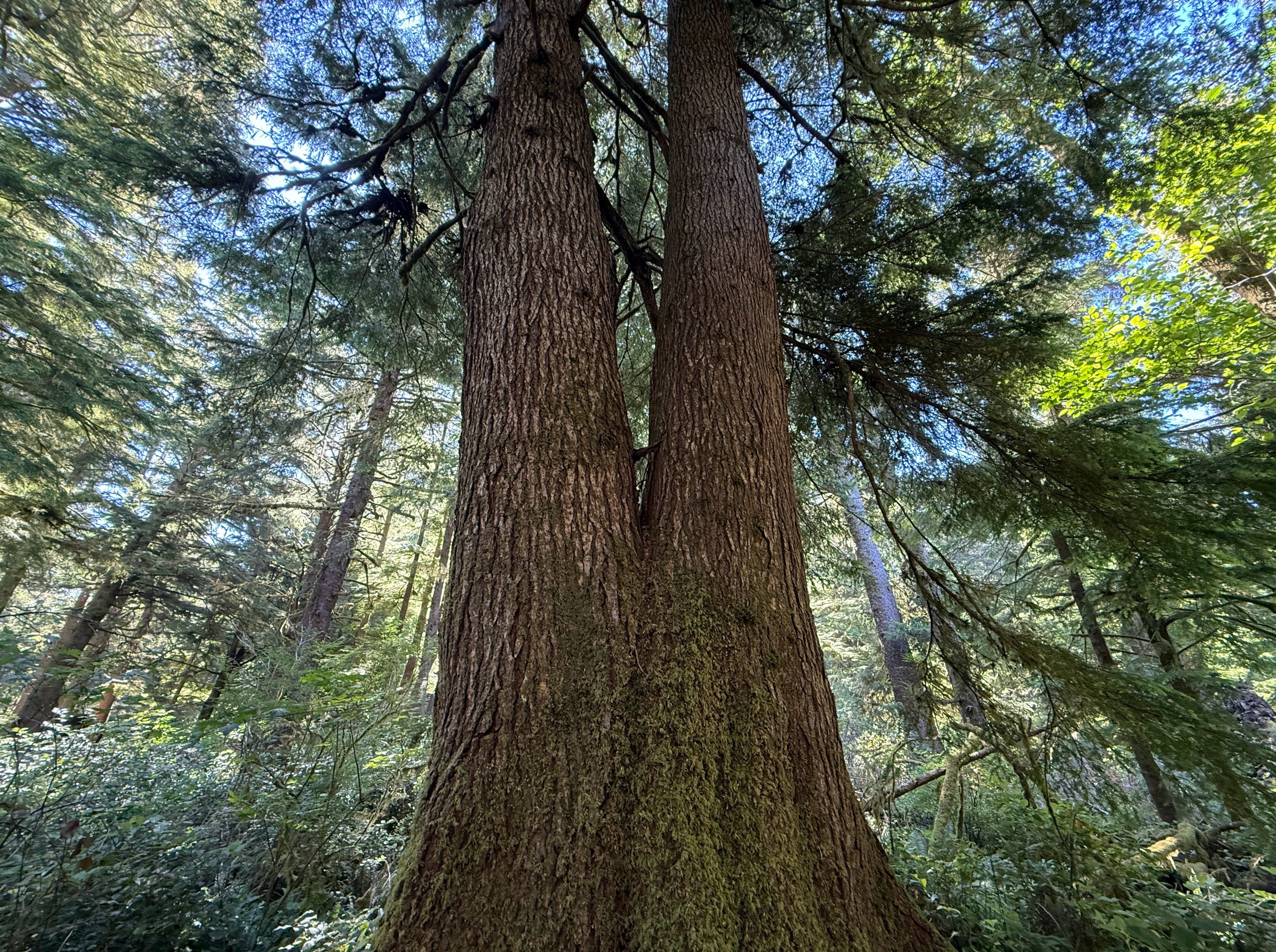
The abutting trunks or limbs sometimes rest on, rub, or grow against each other for years, inflicting a set of paired wounds. In response to the injury, the trees produce a callus or scar tissue. The trunks on both trees continue to grow, fuse, and heal, eventually allowing them to hold against the wind as one.
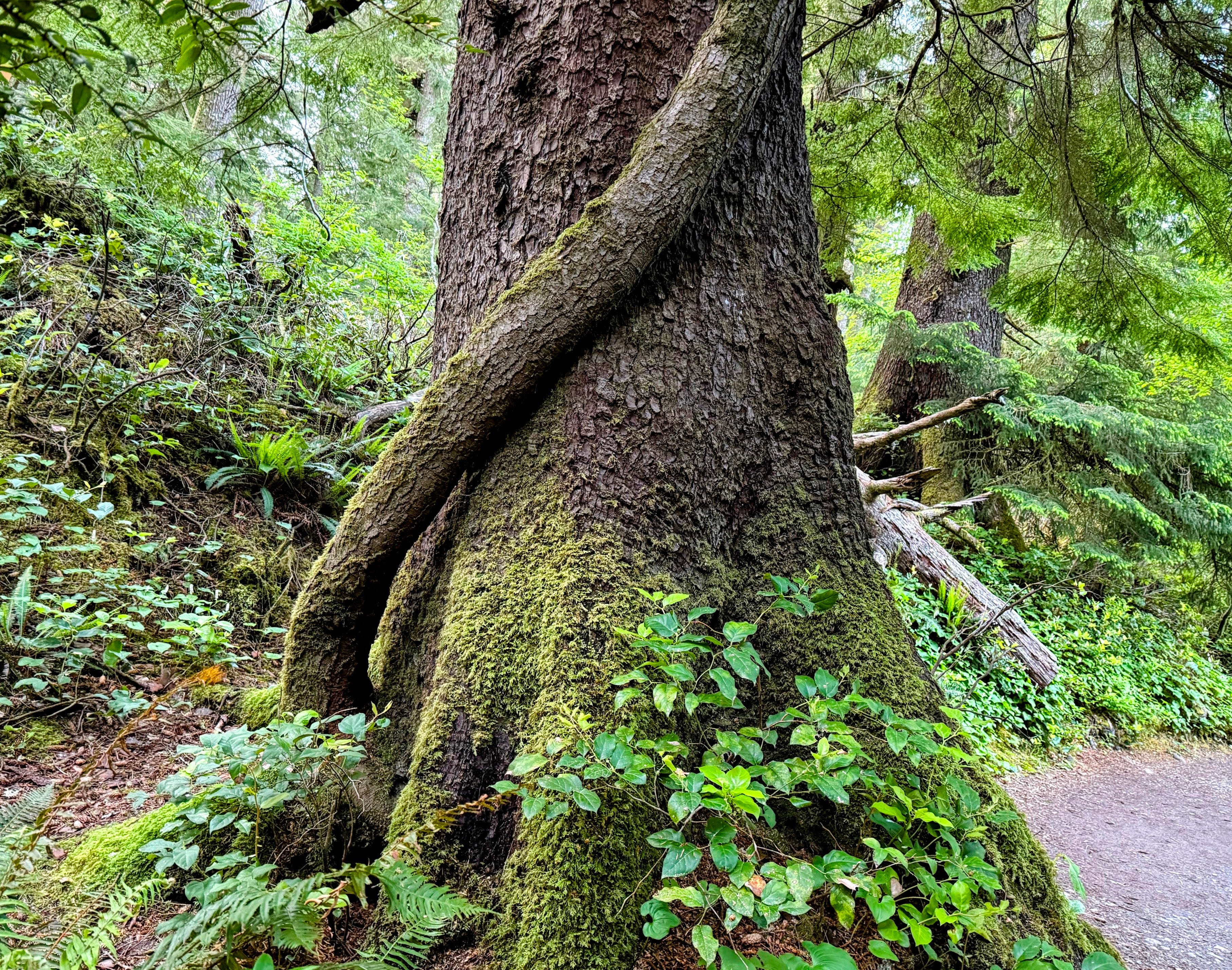
Not only do these trees intertwine their roots, enabling them all to stand sturdier and prosper. But when damage occurs between them, they heal from their traumas together, becoming bonded and stronger for it. “Inosculation” might be the technical term, but it sounds an awful lot like a beautiful, selfless, and encompassing kind of love to me. I don’t think there’s a single being on earth that wouldn’t benefit from an inward kiss.
Wow! That is beautiful. My husband and I have a a 29 yr old son with intellectual disabilities, autism and seizures. We are like these trees, bonded in trauma and shared experiences, holding on to one another.
I can't wait to use "inosculate" in a sentence! Thanks for this learning opportunity!